2.png)


Why Speech Testing Is the Real-World Hearing Test

Updated: Jul 28

Hearing assessments are essential tools for diagnosing hearing loss and figuring out the best next step. But at Clarity Hearing Care, the most common thing we hear isn’t “I can’t hear anything”… it’s “I can hear people talking, I just can’t understand them.” That’s exactly why speech testing matters. It goes beyond beeps and tones and measures what actually impacts your day-to-day life—clarity, comprehension, and confidence in conversation.
Speech tests are especially important for older adults because hearing loss becomes extremely common with age—and it’s closely tied to brain-health risk. In the U.S., about 22% of adults ages 65–74 and 55% of adults 75+ have disabling hearing loss. Even more importantly, major dementia-prevention research has identified hearing loss as a modifiable risk factor—the 2024/2025 Lancet Commission work estimates midlife hearing loss accounts for about 7% of dementia cases at the population level. And in the ACHIEVE randomized trial, a hearing intervention (including hearing aids and support) slowed cognitive decline by 48% over 3 years in older adults at higher risk.
What Are Speech Tests in Hearing Assessments?
Speech tests are specialized hearing evaluations designed to measure a person’s ability to detect, recognize, and understand spoken language. Unlike pure tone audiometry (the “beep test”), speech testing tells us how well your ears and brain work together to turn sound into meaning—especially when the listening environment isn’t perfect (which is basically… always).
There are several types of speech tests, including:

Speech Detection Threshold (SDT): Measures the lowest level at which speech can be detected.
Speech Recognition Threshold (SRT): Determines the softest level at which speech can be recognized and repeated correctly.
Word Recognition Score (WRS): Assesses the ability to understand and repeat words presented at a comfortable loudness level.
These tests are often conducted in quiet environments but can also be performed with background noise to simulate real-life listening conditions.
How Speech Tests Complement Pure Tone Audiometry
Pure tone audiometry is the foundation of most hearing assessments. It measures the softest sounds a person can hear at different pitches. That’s important—but hearing pure tones in a quiet booth does not always reflect how well someone understands speech at dinner, in the car, at church, in meetings, or when the TV is going and someone tries to talk from the other room.
Speech tests fill this gap by:
Identify Speech Perception Difficulties: Some individuals may have normal or mild hearing loss but still struggle to understand speech, especially in noisy environments.
Guide Hearing Aid Fittings: Speech test results help audiologists customize hearing aids to improve speech clarity.
Evaluate Central Auditory Processing: Speech tests can reveal issues with how the brain processes sounds, which pure tone tests cannot detect.
This is also why speech-in-noise testing is such a big deal: your ability to understand speech in noise often cannot be reliably predicted from the pure tone audiogram alone, which is exactly what many patients find so frustrating.
The Importance of Speech Reception Threshold Test
One key speech test used in hearing assessments is the Speech Reception Threshold (SRT) test. This measures the minimum volume level at which a person can correctly repeat about 50% of spoken words. It helps estimate functional hearing ability and also checks whether the speech results align with the pure-tone results.
The SRT test is typically conducted using spondee words—two-syllable words with equal stress on both syllables, such as “baseball” or “hotdog.” The test is performed in a quiet environment, and the volume is gradually adjusted until the threshold is found.
The speech reception threshold test is particularly useful because:
It correlates closely with pure tone average thresholds, helping to confirm hearing loss severity.
It provides a functional measure of hearing related to everyday speech.
It assists in diagnosing discrepancies between hearing sensitivity and speech understanding.

Practical Applications of Speech Tests in Clinical Settings
Speech tests aren’t just “extra data.” They directly affect patient care, real-world outcomes, and what we recommend next. Here are some ways speech tests are used in clinical practice at Clarity Hearing Care and in modern audiology in general:
Hearing Aid Selection and Programming: Speech test results help audiologists select hearing aids with features that enhance speech clarity, such as noise reduction and directional microphones.
Cochlear Implant Candidacy: Speech recognition scores are critical in determining if a patient qualifies for cochlear implants.
Monitoring Hearing Loss Progression: Regular speech testing can track changes in speech perception over time, guiding adjustments in treatment.
Rehabilitation Planning: Speech test outcomes inform auditory training programs designed to improve speech understanding.
Assessing Central Auditory Processing Disorders: Speech tests in noise help identify processing issues that pure tone tests miss.
What Speech Testing Can Tell Us About Brain Health and Quality of Life
Let’s keep it real: untreated hearing loss isn’t just annoying—it can change how people live. When speech becomes harder to understand, many people start avoiding social situations, restaurants, group conversations, and even phone calls. That “small” change can snowball into isolation, fatigue, and reduced confidence.
And there’s growing research interest in the link between hearing intervention and cognitive outcomes in certain higher-risk older adults. In the ACHIEVE study, key findings reported that among older adults at increased risk for cognitive decline, a hearing intervention slowed loss of thinking and memory abilities over three years.

Tips for Preparing for a Speech Test
If you are scheduled for a hearing assessment that includes speech tests, here are some tips to help you prepare:
Rest Your Ears: Avoid loud environments before the test to ensure your hearing is at its best.
Bring a List of Questions: Prepare any questions about your hearing or communication difficulties.
Be Honest About Your Hearing: Describe situations where you struggle to hear or understand speech.
Follow Instructions Carefully: During the test, listen carefully and respond as accurately as possible.
Stay Relaxed: The test is not a pass or fail but a tool to help your audiologist understand your hearing.
By being prepared, you can help ensure the test results are accurate and useful for your hearing care.
Enhancing Communication Through Speech Test Insights
Speech tests provide critical insights that pure tone tests alone cannot offer. They help identify specific challenges in understanding speech, especially in noise, so we can build a plan that actually fits your life—not just your audiogram.
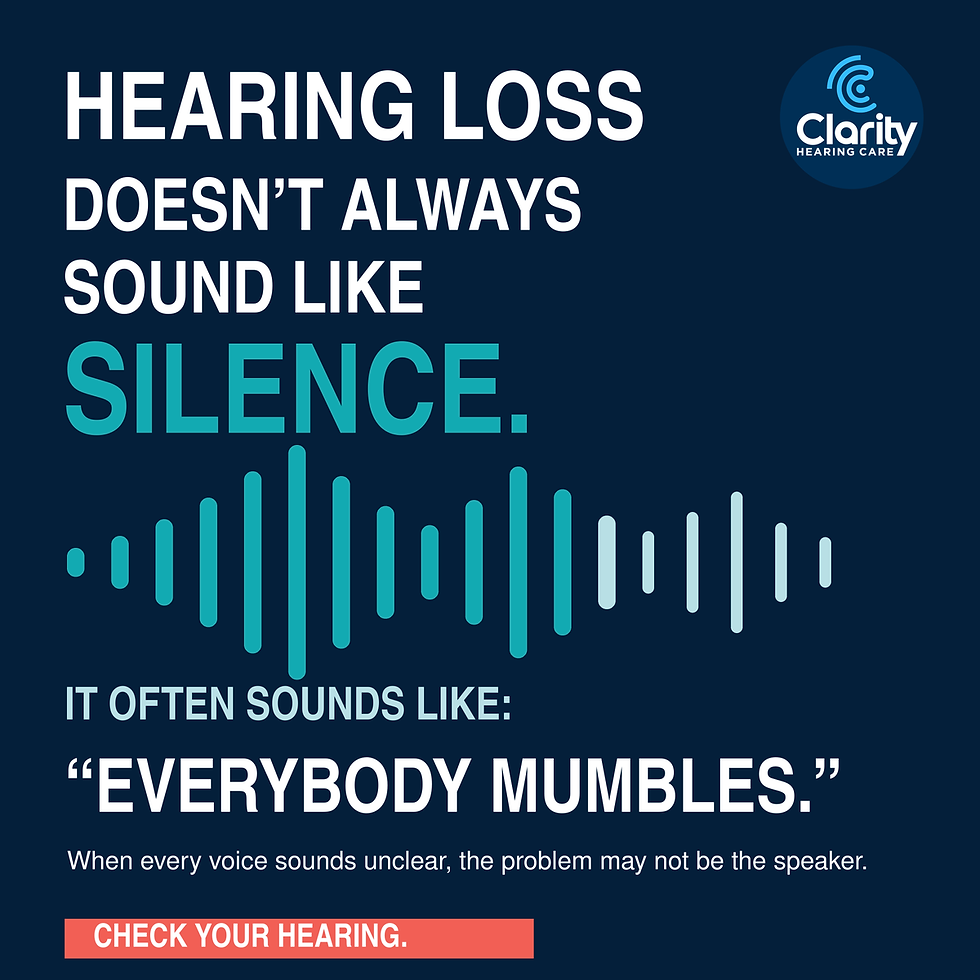
If you’re in Osprey, Nokomis, Venice, Englewood, Wellen Park, North Port, Sarasota, St. Petersburg, or anywhere in Pinellas County, and you’ve been thinking, “People are mumbling” or “I’m always missing words,” it’s worth getting a complete evaluation that includes speech testing.
Ready to get real answers (and real clarity)? Request an appointment with Clarity Hearing Care here: https://www.clarityhearingcare.com/request-appointment
Call your nearest office:
Osprey / Nokomis / Venice2101 S Tamiami Trail, Osprey, FL 34229
☎️ (941) 477-2101
Englewood / Wellen Park / North Port2828 S McCall Rd #43, Englewood, FL 34224
☎️ (941) 475-9909
St. Petersburg / Pinellas County6701 38th Ave N, Suite A, St. Petersburg, FL 33710
☎️ (727) 624-6701